Tracking Icons for Streamlined Workflows
Tracking Icons are a powerful tool for visual communication, designed to enhance clarity and efficiency across various platforms. Whether you're working on a website, mobile app, or print material, these icons provide a consistent and professional look that supports your creative and business goals.
Understanding Tracking Icons
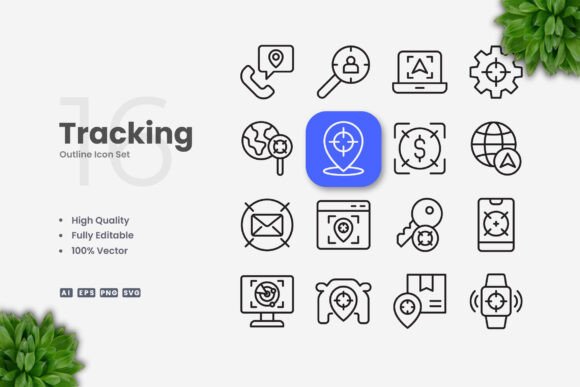
Tracking Icons are a set of vector graphics specifically created to represent tracking-related actions or states. They are ideal for applications that require visual indicators of progress, status updates, or data flow. These icons fit naturally into workflows where clear, intuitive visuals are essential for user engagement and understanding.
Designed with simplicity in mind, each icon maintains a clean aesthetic while delivering precise meaning. This makes them suitable for a wide range of uses, from digital interfaces to physical media. Their adaptability ensures they can be integrated into existing design systems without disrupting the overall look and feel.
Applications Across Different Projects
Tracking Icons can be used at multiple stages of a project, from initial planning to final implementation. Before starting a new initiative, they help visualize the steps involved, making it easier to communicate ideas to stakeholders or team members. During the development phase, they serve as reference points for interface elements, ensuring consistency in design and function.
After a project is completed, these icons can be part of ongoing maintenance or updates. For example, if you're managing a mobile application, tracking icons can help users understand the status of their orders, downloads, or other interactive features. In marketing campaigns, they can be used to track engagement metrics or campaign progress.
Integration with Other Tools and Resources
Tracking Icons work well with a variety of design and development tools. They are compatible with vector software like Adobe Illustrator and CorelDRAW, allowing for easy customization. This means you can adjust colors, stroke weights, or sizes to match your brand guidelines or specific project requirements.
When used alongside other design assets, such as logos or illustrations, Tracking Icons contribute to a cohesive visual identity. They also integrate seamlessly with content management systems, web frameworks, and mobile app development platforms. This compatibility ensures that your designs remain scalable and adaptable over time.
Practical Implementation Tips
To get the most out of Tracking Icons, consider the following tips:
- Plan Ahead: Identify where and how the icons will be used before finalizing your design. This helps ensure they align with your overall layout and user experience strategy.
- Test for Clarity: Ensure that the icons are easily recognizable and convey the intended message. Test them in different sizes and contexts to verify their effectiveness.
- Use Consistently: Apply the same style, color scheme, and spacing across all icons to maintain visual harmony. This improves usability and reduces cognitive load for users.
- Update Regularly: As your project evolves, review and update the icons if necessary. This keeps your design fresh and relevant.
Workflow Examples
Consider a scenario where you're developing a project management app. Tracking Icons can be used to indicate task statuses, such as "in progress," "completed," or "on hold." These icons help users quickly grasp the current state of their tasks without reading lengthy descriptions.
In a marketing campaign, Tracking Icons can be incorporated into social media posts or email newsletters to show the progress of a promotion. For instance, an icon representing a percentage increase can visually communicate growth metrics to your audience.
For educational materials, these icons can assist in illustrating processes or sequences. A set of tracking icons could be used to guide learners through a step-by-step tutorial, making the information more digestible and engaging.
Factors to Consider for Long-Term Use
When incorporating Tracking Icons into your workflow, several factors should be considered for long-term success:
- Preparation: Ensure that you have the right files and resources available. This includes source files in formats like AI, EPS, SVG, and PNG, which allow for easy editing and scalability.
- Compatibility: Verify that the icons work well with your design tools and platforms. This reduces the risk of technical issues during implementation.
- Usability: Focus on creating a user-friendly experience by selecting icons that are intuitive and easy to interpret.
- Organization: Keep your icon library well-organized so that you can quickly access and apply the right icons for each project.
- Quality Control: Regularly review the icons for consistency and accuracy. This ensures that they continue to meet your standards and expectations.
Conclusion
Tracking Icons offer a versatile solution for enhancing visual communication in a variety of contexts. By understanding their role in different workflows and implementing them effectively, you can improve the clarity, efficiency, and professionalism of your projects. Whether you're a designer, developer, marketer, or educator, these icons provide a valuable resource that supports your creative and operational needs.