Voice Recognition Icons: Enhancing User Experience with Simple and Clean Design
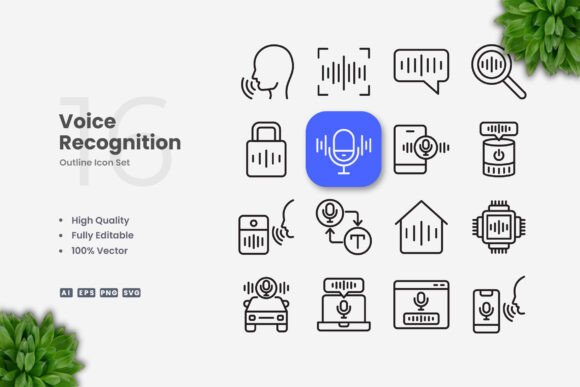
Voice recognition icons have become an essential element in modern design, offering a visual representation of voice-activated technology. These icons are not only functional but also aesthetically pleasing, making them ideal for a wide range of applications. Whether you're designing a website, mobile app, or social media content, Voice Recognition Icons can elevate your project's overall look and feel.
Understanding the Purpose of Voice Recognition Icons
Voice Recognition Icons serve as a visual cue to indicate that a device or application supports voice commands. They help users understand how to interact with a product, making the experience more intuitive. For instance, a user might see a microphone icon on a smart speaker and immediately know that it can respond to voice instructions.
These icons are designed with simplicity in mind, ensuring they are easily recognizable across different platforms and devices. Their clean lines and minimalistic approach make them versatile, allowing them to fit into various design schemes without clashing.
Key Features of Voice Recognition Icons
- High Quality Design: Each icon is crafted with precision to ensure clarity and consistency, regardless of the size at which it is displayed.
- 100 Vector Format: The icons are available in vector format, allowing for seamless scalability without loss of quality.
- 100 Customizable: Users can modify colors, stroke weights, and other attributes to match their brand identity or specific project requirements.
- Editable Stroke: The ability to adjust stroke weight provides greater flexibility in design, enabling customization to suit different visual styles.
- Easy Drag and Drop: With files that support drag-and-drop functionality, integrating these icons into projects is quick and efficient.
Where Can You Use Voice Recognition Icons?
Voice Recognition Icons are incredibly versatile and can be used in numerous contexts. Here are some common applications:
- Websites: Incorporate these icons into your site’s interface to signal voice-enabled features, such as search bars or customer support chatbots.
- Mobile Apps: Enhance user interaction by using these icons to represent voice command options within your app.
- Books and Publications: Add visual elements to guide readers through interactive sections or digital supplements.
- Social Media: Use these icons in posts or graphics to promote voice-activated tools or services.
- Infographics and Flyers: Improve the clarity of information by including these icons to represent voice-related concepts.
- Print Materials: From banners to posters, these icons can add a modern touch to physical marketing materials.
The adaptability of Voice Recognition Icons makes them suitable for both digital and print media, ensuring a cohesive visual language across all platforms.
Who Benefits from Using Voice Recognition Icons?
Voice Recognition Icons cater to a broad audience, including:
- General Consumers: Users who want to quickly identify voice-enabled features in their daily tech interactions.
- Professionals: Designers and developers looking for high-quality, customizable icons to enhance their projects.
- Creators: Artists and content producers seeking visually appealing assets for their work.
- Business Owners: Entrepreneurs aiming to improve user engagement and accessibility through clear visual cues.
- Online Users: Individuals who rely on voice-activated technologies for convenience and efficiency.
By incorporating Voice Recognition Icons, these groups can create more intuitive and user-friendly experiences, ultimately enhancing their products and services.
Strengths and Considerations
Voice Recognition Icons offer several advantages, including their ease of use, adaptability, and aesthetic appeal. However, there are also considerations to keep in mind:
- Design Consistency: While these icons are simple, they should align with the overall design language of the project to maintain visual harmony.
- Accessibility: Ensure that the icons are accompanied by appropriate text labels for users who may not recognize the symbols immediately.
- Technical Requirements: Some customization options may require vector software like Adobe Illustrator or CorelDRAW, which could be a barrier for some users.
Despite these challenges, the benefits of using Voice Recognition Icons often outweigh the limitations, especially when used thoughtfully and strategically.
Real-World Applications
Consider the following scenarios where Voice Recognition Icons prove valuable:
- Smart Home Devices: A microphone icon on a smart thermostat indicates that users can adjust settings using voice commands.
- Educational Tools: In an e-learning platform, these icons can signal that students can ask questions aloud, promoting interactive learning.
- Healthcare Apps: Medical applications might use these icons to allow patients to input symptoms verbally, improving accessibility for those with limited mobility.
- Customer Service Portals: A voice recognition icon on a company’s website can encourage users to engage with AI-powered chatbots for faster support.
These examples illustrate how Voice Recognition Icons can be integrated into various industries to enhance user interaction and satisfaction.
How to Evaluate Suitability for Your Project
Before incorporating Voice Recognition Icons into your project, consider the following factors:
- Target Audience: Determine if your users will benefit from visual cues that indicate voice capabilities.
- Project Scope: Assess whether the icons align with the overall design and functionality of your product.
- Customization Needs: Check if the icons can be modified to meet your specific requirements, such as color schemes or size adjustments.
- Technical Expertise: Ensure that your team has the necessary tools and skills to edit and implement the icons effectively.
By carefully evaluating these aspects, you can determine whether Voice Recognition Icons are the right choice for your project.
Conclusion
Voice Recognition Icons are a powerful tool for enhancing user experience across multiple platforms. Their simple and clean design, combined with high-quality vector formats, makes them a valuable asset for designers, developers, and businesses alike. Whether you're creating a website, app, or marketing material, these icons can help you communicate voice-enabled features clearly and effectively. By understanding their purpose, features, and applications, you can make informed decisions about integrating them into your projects and unlocking their full potential.