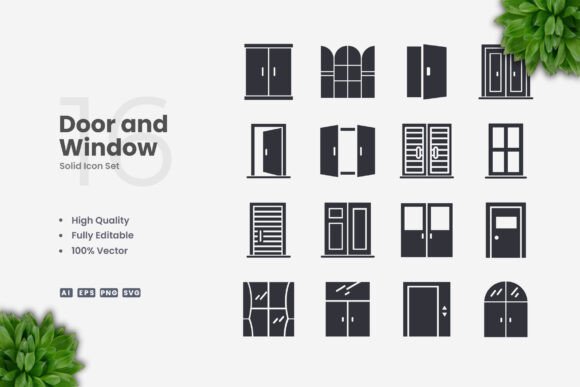
Door and Window Solid Icons: A Strategic Design Tool for Modern Communication
Door and Window Solid Icons are more than just visual elements—they are powerful tools that can enhance clarity, consistency, and professionalism across a wide range of platforms. Whether you're designing a website, mobile app, or marketing material, these icons provide a clean, versatile foundation that supports both aesthetic and functional goals. Their simplicity and adaptability make them ideal for professionals who want to communicate effectively without unnecessary complexity.
Why Door and Window Solid Icons Matter in Design Strategy
In today’s fast-paced digital landscape, design choices directly impact user experience and brand perception. Door and Window Solid Icons offer a strategic advantage by delivering high-quality, customizable visuals that align with modern design principles. These icons are not just decorative; they serve as visual cues that guide users, reinforce messaging, and support the overall narrative of a project.
For entrepreneurs and marketers, this means greater control over how information is presented. For educators and content creators, it means clearer communication of complex ideas. And for designers, it means access to a reliable resource that simplifies the creative process without sacrificing quality.
Key Features That Make Door and Window Solid Icons Essential
The features of Door and Window Solid Icons are designed to meet the needs of professionals who value efficiency, flexibility, and precision. With 100 vector files, these icons are scalable and maintain sharpness at any size—perfect for everything from small social media graphics to large-scale banners. The availability of multiple file formats, including AI, EPS, SVG, and PNG, ensures compatibility with a wide range of design software and platforms.
Customization is another major benefit. Whether you need to adjust colors, resize elements, or integrate icons into existing branding, the ability to edit these files in Adobe Illustrator or CorelDRAW gives you full creative control. This level of flexibility makes Door and Window Solid Icons an asset for anyone looking to maintain a cohesive visual identity across different mediums.
Practical Applications Across Industries
Door and Window Solid Icons have practical applications in various industries. In real estate, for example, they can be used to represent properties, entrances, or interior spaces. In hospitality, they might illustrate hotel amenities, guest rooms, or facilities. In education, they could be used to depict classroom layouts, building structures, or interactive learning environments.
For digital product designers, these icons help create intuitive interfaces. By using consistent visual language, users can navigate apps and websites more efficiently. In print materials such as flyers, posters, or brochures, Door and Window Solid Icons add a professional touch that enhances readability and engagement.
When and How to Use Door and Window Solid Icons Strategically
Understanding when to use Door and Window Solid Icons is key to leveraging their full potential. These icons are most effective when they serve a clear purpose—whether it’s to represent physical spaces, guide navigation, or simplify complex information. Avoid using them randomly or for decorative purposes alone, as this can dilute their impact and confuse the audience.
A good approach is to start with a defined goal. Ask yourself: What message do I want to convey? What visual elements will support that message? If your objective is to improve user experience, focus on icons that enhance usability. If your goal is to strengthen branding, ensure the icons align with your color scheme and overall design language.
Planning Tips for Effective Icon Integration
Before integrating Door and Window Solid Icons into your project, consider the following planning steps:
- Define the purpose: Identify the specific function or message each icon will represent.
- Assess the context: Determine where and how the icons will be used—on a website, app, or printed material.
- Check consistency: Ensure the icons match the style and tone of your existing design elements.
- Test usability: Evaluate how well the icons perform in real-world scenarios, especially in digital interfaces.
The Risks of Using Door and Window Solid Icons Without Clear Intent
While Door and Window Solid Icons are highly versatile, they can also be misused. One common risk is applying them without a clear purpose, which can lead to cluttered designs and confusing user experiences. When icons are added arbitrarily, they may distract from the main message rather than support it.
Another risk is poor customization. If you change colors or sizes without considering the original design intent, the icons may lose their clarity or fail to fit within the broader visual system. This is why it’s important to approach icon integration with intention and care.
How to Use Door and Window Solid Icons Intentionally
To use Door and Window Solid Icons intentionally, start by aligning them with your broader design strategy. Ask questions like: How do these icons contribute to the user journey? Do they reinforce the brand’s identity? Are they accessible to all users, including those with visual impairments?
Consider the emotional impact of your design choices as well. Icons should not only be functional but also evoke the right feelings. For instance, a door icon might symbolize opportunity or transition, while a window could suggest transparency or connection. Understanding these nuances helps you make more thoughtful decisions.
Long-Term Value of a Thoughtful Design Approach
Investing time in planning and executing the use of Door and Window Solid Icons pays off in the long run. A well-structured design system built around these icons can save time, reduce errors, and improve consistency across projects. It also allows for easier updates and adaptations as your needs evolve.
For businesses, this means a stronger brand presence and better customer engagement. For individuals, it means greater efficiency and creativity in their work. Ultimately, the strategic use of Door and Window Solid Icons contributes to more effective communication and better outcomes.
Conclusion: Elevate Your Design with Purpose and Precision
Door and Window Solid Icons are more than just graphic assets—they are strategic tools that can enhance clarity, functionality, and visual appeal. When used thoughtfully, they support a wide range of goals, from improving user experience to strengthening brand identity. By understanding their purpose, mastering their customization, and applying them with intention, you can unlock their full potential in your design projects.
Whether you're a designer, marketer, educator, or entrepreneur, the right use of these icons can make a significant difference. Take the time to plan, test, and refine your approach, and you’ll find that Door and Window Solid Icons become an essential part of your creative toolkit.